

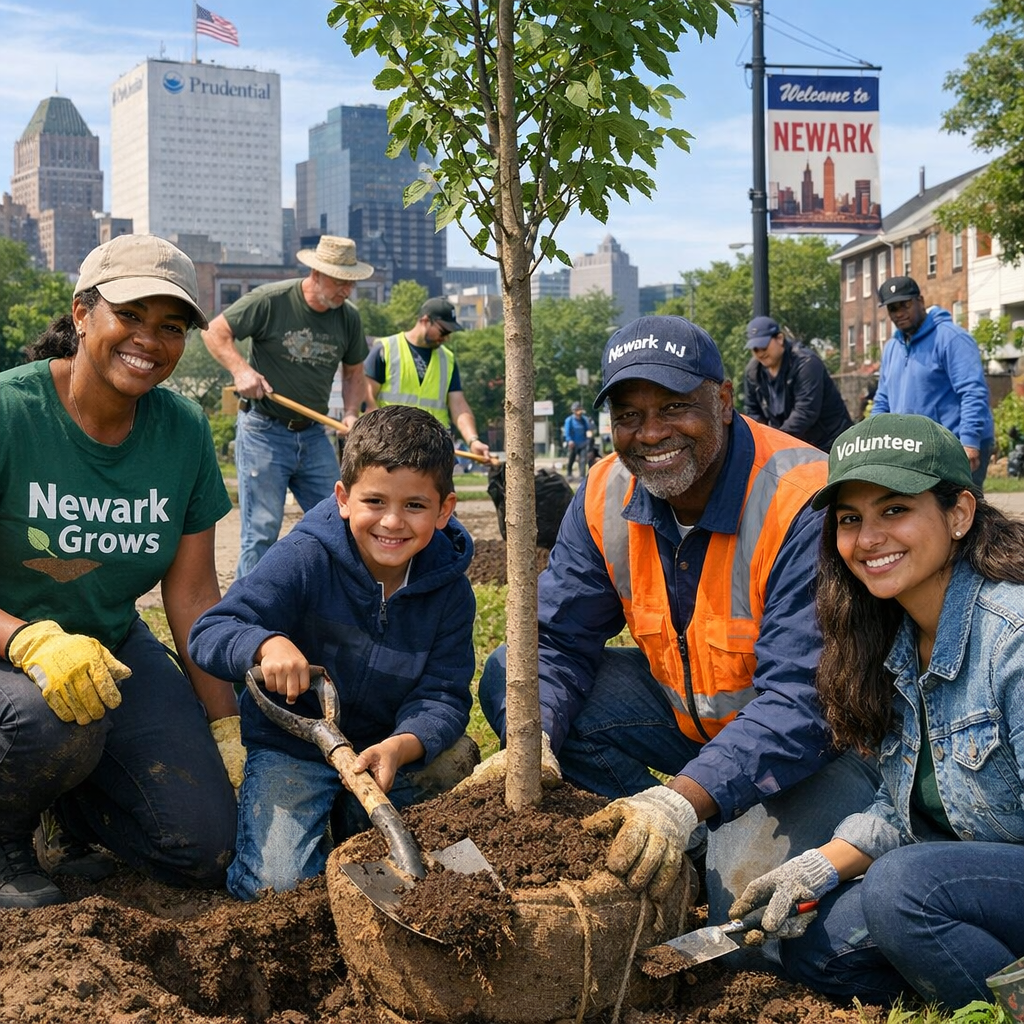
Newark is making significant strides toward sustainability through various community-driven initiatives and environmental programs. These efforts aim to create a healthier, greener, and more resilient city for all residents.
Office of Sustainability’s Comprehensive Strategy
The city’s Office of Sustainability is at the forefront of these efforts, focusing on amplifying Newark’s tree canopy, increasing access to locally grown food, fostering climate-resilient communities, transitioning to clean energy, and cultivating resident-led community transformation. This multi-pronged strategy addresses environmental health and quality of life issues while preparing the city for weather extremes.
Community Energy Plan and Clean Energy Transition
Newark’s reliance on fossil fuels has led to economic challenges and public health concerns. To combat this, the Office of Sustainability has adopted a Community Energy Plan (CEP) that supports a fair and equitable transition to energy-efficient systems and renewable energy sources. Key initiatives include reducing harmful emissions, increasing energy efficiency, fostering a clean energy economy, and developing a green workforce.
Environmental Commission’s Role in Policy and Advocacy
The Environmental Commission, composed of Newark residents serving in a volunteer capacity, advises the Mayor and Municipal Council on environmental and sustainability issues. The Commission played a pivotal role in the passage of Newark’s Environmental Justice and Cumulative Impacts Ordinance, the first of its kind in the United States. This groundbreaking law requires companies to prove they are not adding to Newark’s existing pollution, highlighting the city’s commitment to environmental justice.
Port Authority’s Solar Energy Expansion at Newark Liberty International Airport
In a significant move toward clean energy, the Port Authority of New York and New Jersey announced plans for a major expansion of solar energy infrastructure at Newark Liberty International Airport. The project will add approximately 5 megawatts of generating capacity across five airport sites, producing nearly 5.9 million kilowatt-hours of clean electricity annually—enough to power more than 550 homes. This initiative contributes to the Port Authority’s sustainability goals and demonstrates a commitment to reducing emissions across its facilities.
Community Engagement and Environmental Education
Organizations like the Ironbound Community Corporation (ICC) have been instrumental in advocating for environmental justice and providing environmental education. Founded in 1969, ICC has evolved to focus on increasing recreational green spaces, advocating for public health, addressing food justice, and fighting for policy changes related to environmental and housing justice. Their efforts have significantly contributed to the city’s environmental equity initiatives.
Through these collective efforts, Newark is paving the way for a sustainable future, demonstrating the power of community engagement and proactive policy in addressing environmental challenges.